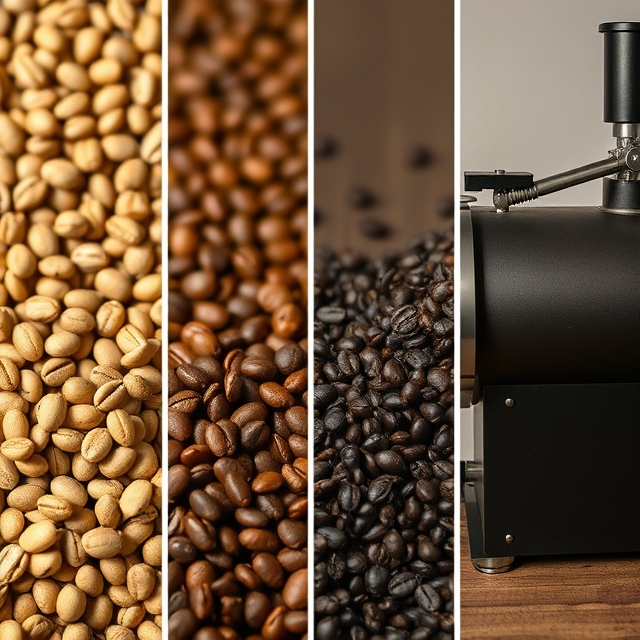
The coffee roasting process transforms green coffee beans into the aromatic beans used for brewing. Heat changes their color, moisture content, structure, aroma, and flavor, with the degree of roast development determining how far those changes progress.
Understanding this process also explains why different coffees can look and taste so different. A very lightly roasted coffee retains characteristics that become less noticeable as roasting continues, while darker roasting produces deeper color and more pronounced roast flavors.
Coffee Starts as a Green Bean
Before roasting, coffee beans are actually seeds found inside coffee cherries. Once the fruit is removed and the seeds are processed and dried, they are commonly referred to as green coffee.
Green coffee has a pale greenish appearance and does not look or smell like the roasted beans used in a typical kitchen.
Roasting is what creates the familiar coffee characteristics.
A controlled combination of heat and time causes the beans to undergo a series of physical and chemical changes. The exact result depends on the bean, roasting equipment, temperature profile, and desired roast style.
What Happens First During Roasting?
At the beginning of roasting, the beans absorb heat and begin losing moisture.
As their internal temperature rises, the beans gradually change from green toward yellow and then increasingly brown. Their aroma also changes as different compounds develop and become more noticeable.
The beans also begin expanding as pressure builds inside their structure.
This early stage is important because the amount of heat and time applied before further roast development influences the final character of the coffee.
The Importance of First Crack
One of the most recognizable stages in roasting is called first crack.
As the beans heat and internal pressure increases, they can make audible cracking sounds. This stage signals a significant physical transformation in the beans.
After first crack, the roaster can continue developing the coffee or stop the roast, depending on the intended style.
Very lightly roasted coffee may be removed relatively early, while medium and dark roasts continue through additional development.
The timing of this stage therefore helps explain why roast levels can differ so dramatically even though they all begin with the same basic green coffee.
How Roast Development Changes Color
Color is one of the easiest visible signs of roast development.
Green coffee begins pale. As roasting progresses, the beans move through lighter yellow and brown shades before becoming increasingly dark.
A simplified progression looks like this:
- Green coffee: unroasted and pale
- Very light roast: pale yellow, tan, or light brown
- Light roast: light brown with limited roast development
- Medium roast: noticeably brown with greater development
- Dark roast: deep brown to very dark, depending on the roast
The exact appearance varies between coffees, so color should not be treated as a perfect technical measurement. Nevertheless, it provides a useful visual indication of how far the roasting process has progressed.
Why Very Light Roasts Behave Differently
The amount of roast development affects the physical structure of the beans.
As coffee roasts, it expands and becomes more porous. Very lightly roasted beans have undergone less of this structural transformation, so they can remain unusually dense and hard.
This is particularly relevant when working with exceptionally light roast styles.
For example, white roast represents a roast style where the beans retain a much paler appearance than conventional roasted coffee. Their physical characteristics can therefore require more attention during grinding and preparation.
How Roasting Affects Flavor
Roasting creates and develops many of the aromas and flavors associated with brewed coffee.
A lightly roasted coffee can preserve more characteristics associated with the original bean, while greater roast development tends to introduce stronger roasted, caramelized, and darker flavor characteristics.
This does not mean that every light roast tastes the same or that every dark roast has an identical flavor. Coffee origin, variety, processing method, freshness, and brewing all contribute to the final cup.
Roasting is one major part of the equation rather than the only factor.
Why Roast Level Matters for Brewing
Different roast styles can behave differently during brewing.
A very light roast may require different grinding and extraction adjustments from a darker coffee. The density of the beans can affect grinding, while the roast’s flavor characteristics can influence how you evaluate the finished cup.
Brewing method matters as well.
Espresso, drip brewing, French press, and pour-over all extract coffee differently. The same beans can therefore produce noticeably different results depending on the equipment and recipe used.
For that reason, it is useful to follow the producer’s brewing guidance when trying an unfamiliar roast style.
Does More Roasting Mean More Caffeine?
Not necessarily.
It is tempting to judge caffeine by bean color, but roast appearance alone cannot determine the caffeine content of a serving.
Caffeine intake depends on factors such as the coffee variety, amount of coffee used, serving size, and brewing method. Roast level is only one characteristic of the coffee.
Therefore, a darker-looking bean should not automatically be assumed to contain more caffeine than a lighter-looking bean.
Why Do Darker Beans Sometimes Look Oily?
With substantial roast development, the surface of some coffee beans can become visibly oily.
This happens because roasting changes the bean structure and allows oils and other compounds to become more apparent at the surface.
Not every dark roast will have the same appearance, however. The amount of visible oil depends on the coffee and how it was roasted.
Very lightly roasted coffee generally looks much drier and denser because it has not undergone the same degree of roast development.
Can You Tell Roast Level From Color Alone?
Color provides useful information, but it is not enough to identify every detail of a roast.
Two coffees can have similar colors while differing in origin, bean variety, roasting profile, and flavor. Lighting and surface appearance can also affect how the beans look.
For a more complete understanding, consider the producer’s stated roast level together with the bean’s physical characteristics and recommended brewing method.
This is especially helpful when dealing with unusual roast styles that do not fit neatly into everyday light, medium, and dark categories.
Common Questions About Coffee Roasting
What is the coffee roasting process?
It is the controlled application of heat to green coffee beans. The process removes moisture and changes the beans’ color, structure, aroma, and flavor.
What is first crack?
First crack is a stage during roasting when expanding beans produce audible cracking sounds as internal pressure causes physical changes in their structure.
Why are lightly roasted beans harder?
They have undergone less expansion and structural transformation than beans roasted further. As a result, they can remain denser and harder to grind.
Does roasting change coffee flavor?
Yes. Roast development affects the compounds responsible for aroma and flavor. Different roast levels can therefore produce distinctly different sensory profiles.
Is white roast coffee the same as green coffee?
No. Green coffee is unroasted, while white roast coffee has undergone a very light roasting process.
The Roast Determines More Than Color
The coffee roasting process is responsible for far more than turning green beans brown. Heat changes the beans’ structure, moisture, density, aroma, and flavor while determining how developed the final roast becomes.
That is why a very lightly roasted coffee can look, grind, and taste different from a medium or dark roast. Once you understand the relationship between roasting and bean development, the wide range of coffee styles becomes much easier to understand.